 Hawaii Photoshoot
Do You Need a Permit to Photograph on a Hawaii Beach?
A Hawaii photography permit is one of those subjects where the honest answer is short and the useful answer is not. Short version: your own holiday photographs need nothing, anywhere. A photographer you have hired, working on a state beach or in a state park, needs a permit, and there are two kinds with different fees and lead times. Then there is a county layer on top, and a botanical garden layer on top of that. This page sets out what the Hawaii Film Office and the Department of Land and Natural Resources actually say, what it costs, and who is supposed to file it, so you can ask your photographer one intelligent question before the location gets fixed. The sessions themselves are compared on the Hawaii photoshoot catalog.
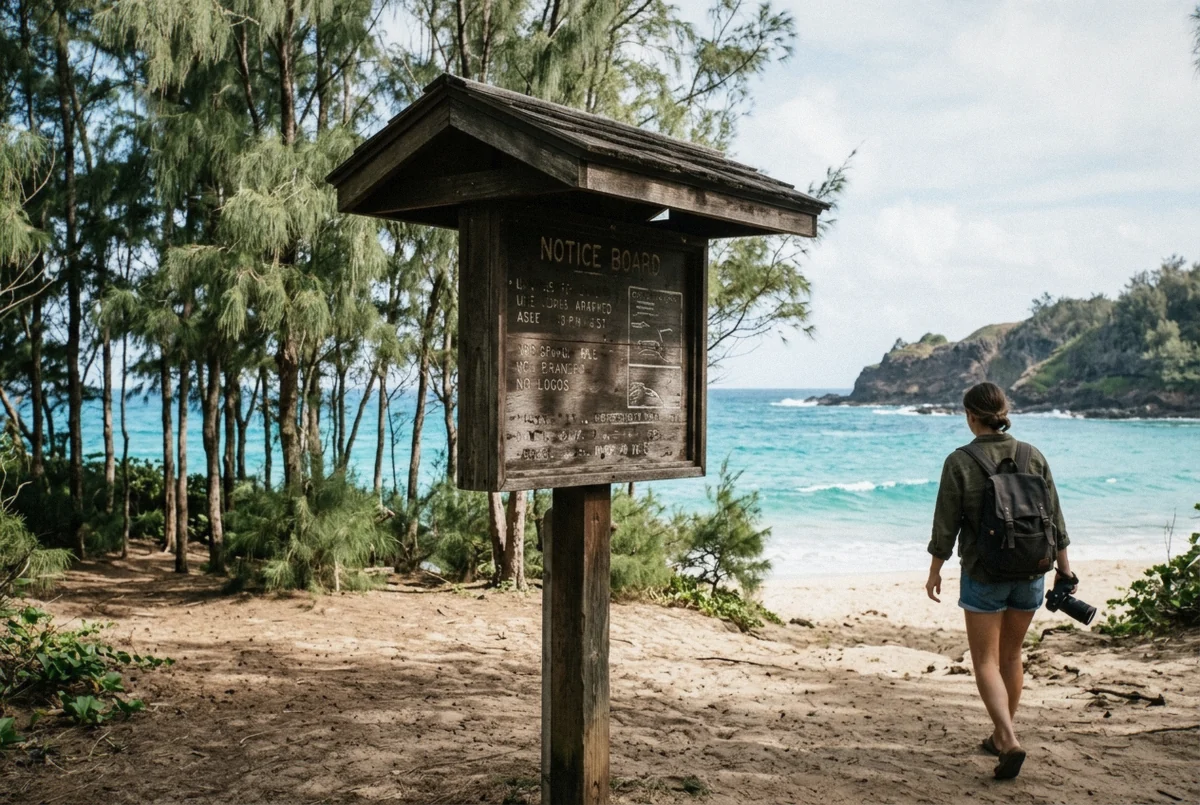
Personal photographs need no permit anywhere in Hawaii. A hired photographer on state land is a different question.
Quick answer
The Hawaii Film Office states that film permits are not required for photography that is only for personal use or that takes place on private property. Commercial photography on state beaches, parks, trails and harbours does need one: either an Open and Accessible ePermit, valid up to a two-week period for a listed set of sites, with a $10 online convenience fee, or a Standard Film Permit submitted at least five business days ahead. Beaches and parks run by the Division of State Parks add a $100 per day nonrefundable location fee.
Key takeaways
- Filing is the photographer's job, not yours, but only one listing in our catalog says the permit is included
- The sandy beach is state land even when the park behind it belongs to the county
- Honolulu county parks are a separate application: Parks Permit Office, 808-768-3440
- Botanical gardens and a few named sites have their own fees on top
The Rule in One Sentence, and Its Exceptions
Personal use is exempt
The Film Office's own wording is unambiguous: film permits and insurance are required for all filming activity, commercial, educational or non-profit, that takes place within the state's jurisdiction, and film permits are not required for photography or video that is only for personal use or which takes place on private property.
So a family with a phone, a visitor with a tripod at the Pali, a couple asking a stranger to take a picture at Lanikai: no permit, no forms, nothing. This is worth stating plainly because the rest of this page is about the other case and it is easy to come away thinking Hawaii regulates photography in general. It does not.
Hiring somebody changes the category
The moment money changes hands for the photographs, the activity is commercial, and commercial activity on state land needs authorisation. That is true whether the output is a wedding album or fifteen holiday portraits, and it is true whether the photographer sets up lights or works handheld for twenty minutes.
The practical consequence for you as the client is small. The photographer files, the photographer pays, the photographer carries the insurance certificate. What you should know is which listings price that in, because one of them explicitly does not.
The Two State Permits, Side by Side
Both are administered through the Hawaii Film Office for locations under state jurisdiction, which includes Department of Land and Natural Resources beaches, parks, trails and forestry areas.
| Open and Accessible ePermit | Standard Film Permit | |
|---|---|---|
| What it covers | A published list of low-impact sites | Any state location, named on the application |
| Validity | Up to a two-week period | The scheduled prep and shoot dates |
| Fee to apply | $10 online convenience fee | No application fee stated |
| Lead time | Can be pulled within two to three days | At least five business days ahead |
| Insurance | Required before applying | Required before the activity |
| Location fees | None for listed sites | State Parks $100/day; DOBOR and DOT sites $100/day; Hawaiian Home Lands from $1,000/day |
| Monitoring | Not applicable | Supervisory state personnel at $60/hour, four-hour minimum, where required |
The Open and Accessible route is what most vacation photographers use, and the Film Office recommends it in as many words for photographers who often work at short notice: stick to the listed sites and the permit can be pulled within two to three days. The permit covers photography only; it does not authorise soliciting business on site, and it does not cover a wedding ceremony.
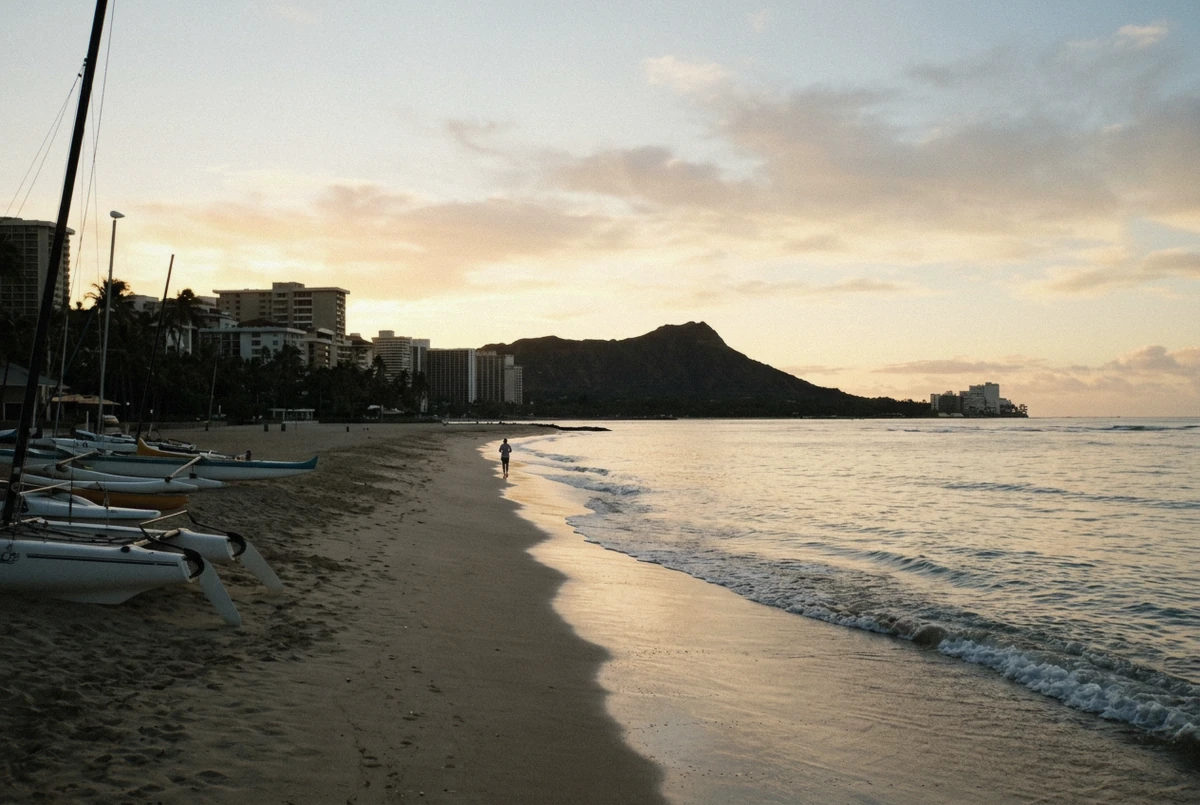
Commercial work on Waikiki is restricted to the Hilton helipad to Hilton pier stretch.
Wiki Permits, Weddings and the Sand Underneath You
What a Wiki Permit is
Wiki Permits is the DLNR Land Division's online system for right-of-entry permits covering commercial activity and beach weddings on unencumbered state shorelines. Applicants register, submit a certificate of liability insurance, and pull the permit for a named beach from the published list of Wiki Permit sites.
If your booking is a photoshoot rather than a ceremony, this usually is not your paperwork. If you are combining the two, note the Film Office's own guidance: meet the Wiki Permit requirements and a state film permit is not additionally required for the photography; fail them, for instance by bringing more guests than allowed or setting up an arch, and you need both.
The jurisdiction trap
The Land Division states it directly: where you have a county park, the shoreline is still under the jurisdiction of the state, so an event on the sandy beach needs a state permit, and the county cannot issue one for sand it does not control.
This catches people who assume a Honolulu beach park is a single legal object. It is two: county grass, state sand.
Ceremonies need a different document again
For weddings and elopements, State Parks require a Special Use Permit submitted 45 days in advance, and forestry sites may too. That is a planning horizon, not a formality, and it is the reason wedding photographers on these islands quote lead times that sound excessive for a beach and twenty guests.
The County Layer, and the Gardens
City and County of Honolulu
For city park property on Oahu, permits go through the Parks Permit Office on 808-768-3440, and the office handles what it calls personal-use photography: photographs taken by a commercial photographer for the client's own use, which is exactly what a vacation portrait session is. Applications are processed on paper at 650 South King Street. Heavy production equipment on city park property carries a $500 cleanup and restoration deposit, which is not a category any portrait session falls into.
Neighbour islands run their own county film offices with their own forms.
Botanical gardens are their own world
Honolulu's botanical gardens, including Hoomaluhia in Kaneohe, run a separate photography permit through the city's Botanical Gardens permit system, with its own fee schedule and hours. Hoomaluhia in particular is one of the most searched photography locations on Oahu, and the permit question there is asked more often than for any beach. If a photographer proposes it, ask who is booking the garden slot.
Waikiki has a stretch rule
Commercial photography on Waikiki Beach is restricted to the section running from the beach fronting the Hilton helipad through Duke Kahanamoku Beach to the Hilton pier, and that stretch also requires county approval or the property owner's consent. Elsewhere along Waikiki the answer for commercial work is no. It is one more reason experienced Honolulu photographers steer sessions toward Ala Moana, Kaimana or the windward beaches.
How This Plays Out on a Normal Booking
The realistic sequence
You book a session, the photographer messages you to agree a beach, and you reply asking whether that spot is covered by their permit. If they hold an Open and Accessible permit and the beach is on the list, the answer is yes and the conversation is over. If they propose a Division of State Parks site, someone is paying $100 for the day, and it is worth knowing whether that someone is you.
On a 45-minute group session where the permit is stated as included, none of this arises. On the concierge listing, where permit fees are excluded in writing, raise it during the pre-shoot consultation rather than on the sand.
Sites where the answer is more than a beach
Some of the best-known locations on our photo spots map carry access rules that have nothing to do with photography and everything to do with whether your session happens: Hanauma Bay needs an advance reservation and closes Mondays and Tuesdays, the Kilauea Point refuge on Kauai opens Wednesday to Saturday, Diamond Head's crater trail needs a reservation for non-residents, and Waimea Canyon charges state park entry. A photographer who works these islands weekly knows all of it, which is part of what you are paying for.
Drones are a separate conversation
Nothing in this catalog includes drone footage, and that is not an accident. Drone work over state land requires its own authorisation through the Film Office's drone activity process, on top of federal rules, and several of Hawaii's most photographed sites sit inside restricted or sensitive airspace. If a photographer offers aerial shots as a casual add-on, ask what permission it runs under.
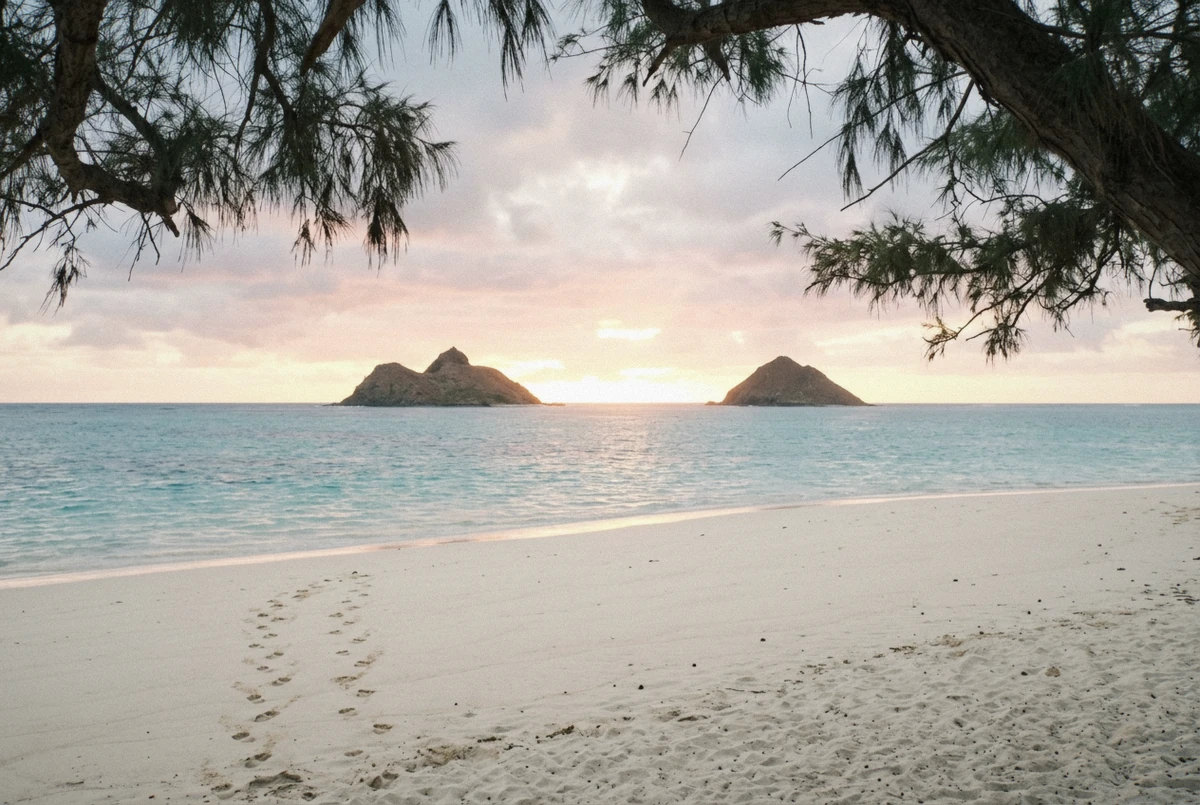
County grass, state sand: the jurisdiction line runs where the vegetation stops.
What Our Listings Say About Permits
We read all twelve listings for this. Three positions exist, and two of them are silence.
| Listing | Permit position |
|---|---|
| Couples and families, Oahu | States the State of Hawaii photo permit is included in the price |
| Concierge photoshoot | States required permit fees for some beaches are NOT included |
| The other ten listings | Say nothing either way |
Silence is not an admission of anything. Most working photographers on these islands hold an Open and Accessible permit as a matter of course, precisely because it covers a list of sites for two weeks at a time. But it is a fair, cheap question to put in your reply to the photographer's first message: which beach are you proposing, and is it covered by your permit?
A professional will answer it in one line.
Hawaii Photography Permit Questions
Do you need a permit to take photos in Hawaii?
Not for personal photographs, anywhere. The Hawaii Film Office states film permits are not required for photography that is only for personal use or on private property. Commercial photography on state land does need one.
Do I need a permit for a photoshoot on a Hawaii beach?
You do not; your photographer does, if the beach is state land, which most are. The two options are an Open and Accessible ePermit with a $10 online fee covering listed sites for up to two weeks, or a Standard Film Permit filed at least five business days ahead, with a $100 per day fee at Division of State Parks sites.
Can I get the permit online?
Yes for the Open and Accessible ePermit, which is applied for through the state's online system and can be pulled within two to three days when the site is on the published list. Standard Film Permits go to the Film Office by email; Honolulu county park permits are still processed on paper.
What does a Hawaii photography permit cost?
The Open and Accessible ePermit carries a $10 online convenience fee. Location fees apply at some state sites: $100 per day at Division of State Parks beaches and parks, $100 per day at DOBOR and DOT locations, and from $1,000 per day on Hawaiian Home Lands. Where state monitoring is required it is billed at $60 per hour with a four-hour minimum.
Who files it, me or the photographer?
The photographer. It is their commercial activity, their insurance certificate and their name on the permit. Your only job is to ask, and to pick a listing whose position on the fee you are comfortable with, which the comparison table makes easy.
What happens if a photographer works without one?
In practice a state or county employee can stop the session, which is a bad way to lose your one sunrise slot. The permit exists to manage commercial use of public land rather than to punish photography, and enforcement is generally a conversation rather than a fine, but the session is over either way.